Septic tank pumping in Nashville runs $150 to $300 for a standard day-rate service call, with the exact number depending on tank size, access, and how much sludge has built up. A typical 1,000 gallon tank falls in that band. Get a firm quote before the truck rolls, and check septic tank pumping cost for the full breakdown of what moves that number.
Most Nashville households pay somewhere between $150 and $300 for a single pumping visit, and that day-rate band covers the bulk of standard residential jobs. Where you land in that range depends on tank size, how deep the truck has to run its hose, and whether the lid is buried or sitting at grade. A 1,000 gallon septic tank pumping job on flat ground with an accessible riser tends to sit near the low end, similar to what septic tank cleaning runs for a comparable setup. A tank buried under a deck, or one that has not been touched in years and needs extra agitation, pushes toward the high end. Septic pumping service calls in Nashville generally get quoted after a quick look at tank size and site access, not off a phone estimate alone. If you are weighing a same-day need against a scheduled one, emergency septic service carries its own pricing logic tied to how fast the crew has to move, separate from routine cleaning.
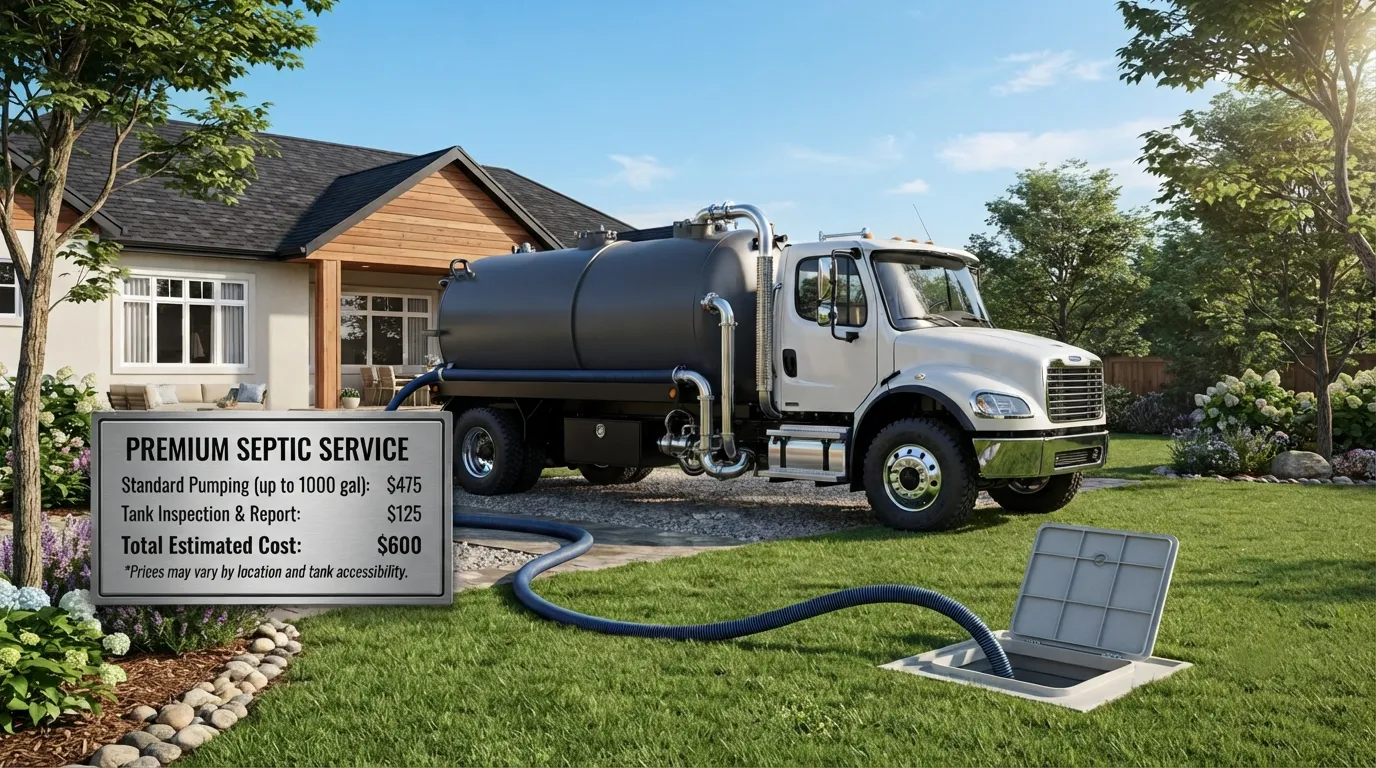
Access and tank condition move the number more than anything else. A tank with a surface-level riser and clear path for the hose is a straightforward service call, much like the access questions covered in porta potty placement guide for equipment on the same property. A tank buried two feet deep under landscaping, or one that needs the truck parked 60 feet away because of a tight driveway, adds labor time and that shows up in the invoice. Grease and solids matter too: a grease interceptor gets pumped once fats, oils, grease and solids reach 25 percent of the liquid depth, and a septic tank that has gone past its normal interval behaves the same way, with thicker sludge that takes longer to clear, a pattern also covered on septic tank warning signs from a different angle. Homeowners weighing pump costs against fixing a slow drain first should read septic tank warning signs before booking, since some symptoms point to a clog rather than a full tank. If the property runs a commercial kitchen instead of a home system, grease trap pumping is priced and scheduled differently from a residential septic call.
A residential septic tank is typically pumped every 3 to 5 years, and that interval is driven by tank size relative to household size. A smaller tank serving a full house gets pumped more often than a larger tank serving fewer people, the same logic used to size how many porta potties do I need for a jobsite crew. Skipping the schedule does not save money in Nashville; it just moves the cost into a harder job later, since solids compact and settle when they sit past the normal window. For a fuller breakdown of that interval and what changes it, how often to pump a septic tank walks through the tank size and household math in more detail than fits here. If your property is on the edge of that 3 to 5 year mark and you are not sure which side you are on, that page is the better read before you call for a quote. Homes near Brentwood, 15.3 miles south of Nashville, and homes closer in tend to face the same pumping math, since interval depends on tank and household size, not location inside the metro, and the same holds for homes near Franklin, 21.4 miles south.
Placement of equipment or a service truck in the public right of way needs confirming with the city before a job in a tight lot, since we have not verified a blanket rule either way. That is a site-access question more than a permit question for most residential pumping calls, since the truck usually stays in the driveway, similar to the access notes in porta potty permit requirements for equipment placed curbside. Commercial and multi-unit properties sometimes have different access and scheduling needs, and if your property also runs portable restrooms alongside septic service, for example during a renovation, home renovation porta potty needs are usually handled as a separate line item from the pumping call, and a portable restroom rental can cover the gap while the tank is out of service. For properties that need a holding tank instead of pumping while a system is repaired or replaced, holding tank rental is worth a look, and OSHA 1926.51(a)(1) requires an adequate supply of potable water at any active worksite regardless of which sanitation setup is in use, whether that site also has a temporary fence rental up or not.
Yes, by a wide margin, and that is exactly why the 3 to 5 year interval matters. A pumping call in the standard day-rate band is a fraction of what a septic system replacement costs, and staying on schedule is the cheapest way to keep a system out of failure territory, the same reasoning behind checking dumpster rental cost before a renovation job snowballs. Nashville homeowners comparing service options sometimes ask about septic tank cleaning versus a full inspection and pump combined, and the two are usually bundled into one visit anyway. If you are budgeting for a rental property or a home you are about to sell, septic pumping service records also help establish maintenance history for a buyer. For construction sites near Nashville that need sanitation without touching an existing septic system at all, construction site services covers portable options that do not run through the tank at all, including a standard porta potty rental or a handwashing station rental for crews on site.
Expect a day-rate service call in the $150 to $300 range for a standard residential tank. The final number depends on tank size, access, and how much buildup the crew finds, so a firm quote after a quick site look beats a phone estimate every time.
A 1,000 gallon tank is a common residential size and typically falls within the standard $150 to $300 day-rate band for pumping. Tanks with harder access or heavier buildup can run toward the higher end of that range.
Every 3 to 5 years for most residential systems, driven by tank size and household size together. A smaller tank with more people using it needs pumping more often than that same interval would suggest for a larger tank.
Often yes, though availability depends on the crew's route that week. If the need is urgent, emergency septic service is built around faster turnaround than a routine scheduled pump.
Yes. A buried riser, a long hose run, or a tight driveway all add labor time to the job, and that additional time is reflected in the final invoice rather than the base day rate.
Yes. Nashville Porta Pros delivers septic tank pumping cost across Nashville and the surrounding metro, with same-day and next-day drop-off available on most orders.
Pricing depends on the unit and how long you need it. See our cost breakdown and request a free quote for an exact figure.
Standard rentals include scheduled service — a pump-out, a clean, a restock and fresh deodorizer. Busy or hot-weather sites can be serviced more often.
Call now or request a free quote — clean units, on-time delivery, transparent pricing.